 Little Roots
Gear Guide
What we actually bring to McCollum Park, tested by PNW toddlers.
Thinking about joining? Try a $15 class (opens in new tab) and see what Wednesdays are like.
New family? Here’s what you need for Wednesday.
What to wear
- Rain suit
- Rain boots
- Base layers in merino or synthetic, no cotton
- Warm hat and mittens on cold days
In the backpack
- Full water bottle
- Nut-free snack
- Full change of clothes
- Two clean washcloths in a ziplock bag, for muddy or painty hands
- Diapers and wipes, or a pull-up and extra underwear if potty training
- Sunscreen and bug spray in warmer months
- Picnic or outdoor blanket
Potty training? Our privacy tent has a children’s potty, but I’d still pack a pull-up just in case. Accidents are no fun outside, especially on cold days. I’m always happy to talk through our setup and help make it work for your family.
We bring everything else: art supplies, sensory materials, hand lenses, and books.
Some links on this page are affiliate links. If you purchase through them, a small percentage supports Little Roots at no extra cost to you.
What my daughter wears to Little Roots
Every Wednesday
On top
- Dry days: OAKI trail rain pants (opens in new tab)
- Rainy days: OAKI one-piece rain suit (opens in new tab)
On colder mornings, she wears both her iksplor and Reima base layers, and I add a fleece mid-layer and her Reima Paljakka beanie. Wind and shade make a big difference, so I go by how it feels outside, not a set temperature.
You don’t need to buy everything on this list. Start with what you don’t have and build from there. Lots of it is easy to find secondhand, too. Here’s where to look. The most important thing is that you and your kid show up dressed for the weather and ready to get muddy.
Everything here is something I’ve used myself or researched carefully, and we choose nontoxic, PFAS-free products whenever possible.
Little Roots families get discounts at several of these brands. See the codes.
The Backpack
What to look for: A chest clip, a water bottle pocket on the outside, and light enough for your toddler to carry. We recommend 12L, or 18L for older or taller toddlers.
REI Co-op Tarn 12 L Pack (Kids) (opens in new tab)
Our top pick. Has a chest clip, water bottle pockets, and comes in fun colors. The 12L is the sweet spot for our 1 to 3 year olds who want to carry their own pack. It’s big enough for a change of clothes, snack, and water bottle without being too bulky for little shoulders. (If your child is on the older or taller side and wants more room to grow into, REI also makes an 18 L version.)
Tip:Label everything with your child’s name.
Fall, Winter & Spring Gear
October through May
Here in the Pacific Northwest, expect rain, mud, and a toddler who finds every puddle. The key to staying warm and dry outdoors is layering, and once you get the hang of it, rainy Wednesdays get a lot easier.
The golden rule: no cotton on cold or wet days. Cotton absorbs moisture and holds it against the skin, which makes kids cold fast. Choose wool or synthetic fabrics for base layers and fleece, and save the cotton for summer.
Don’t feel pressure to stock up. Two sets is all you need, one to wear and one to pack as a change of clothes.
If your child gets sweaty during active play, take a layer off. Damp layers get cold fast once they stop moving.
Curious how we set up class when it’s cold? See Cold and Wet Weather for that, plus tips to keep your family comfortable.
Sizing tip:Reima runs about one size big, so order your child’s current size.
One piece or two?Some forest preschools for older kids recommend rain bibs and a jacket over a one-piece, since they’re easier to get off for bathroom trips. At this age, though, one-pieces have real upsides. There’s no gap at the waist for rain, mud, or cold air to sneak in when they crouch, climb, and sit on the ground. Weigh what works best for your child and your family right now.
Layer 1: Base Layer
Merino wool is our favorite here. It regulates temperature, wicks moisture, and stays warm even when wet.
What to look for: Merino wool or synthetic, like polyester. OEKO-TEX certified is ideal. Long cuffs give them room to grow.
iksplor Merino Wool Base Layers (opens in new tab)
This is what my daughter wears under everything. Long limbs and thumbholes mean you get extra wear out of one size. They also make adult merino layers, so you can layer up the same way your little one does.
Reima Moomin Trivsam Base Layer Set (opens in new tab)
A toddler top and bottoms in a merino wool and lyocell blend. My daughter wears this on colder mornings along with her iksplor layers.
Layer 2: Fleece or Wool Mid-Layer (Colder Days)
What to look for: Fleece or wool, no cotton sweatshirts. Jackets that zip up the front are easiest for toddlers. Easy to find secondhand since kids grow out of them fast.
Patagonia Synchilla Fleece and Overalls (opens in new tab)
What my daughter and I both wear on cold mornings. My own Synchilla has made it through about ten years of fall and winter, so I don’t mind paying more for this one. My daughter wears an older version of the Baby Shearling Overalls (opens in new tab), soft recycled fleece with a center zip and elastic leg cuffs. Made in a Fair Trade Certified factory, and baby sizes start at newborn.
Reima Tahti Fleece Jumpsuit (opens in new tab)
If I were buying new, this is what I’d get. A one piece fleece that goes under the rain suit on cold mornings, with a full zip and a chin guard so the zipper doesn’t rub. Sizes run from 9 months to 3T. The same fleece also comes as a separate top and bottoms, the Tahto Knit Fleece Set (opens in new tab), which is a good pick if your child is potty training since the bottoms come off on their own.
Layer 3: Insulation (Coldest Days)
A puffy jacket or snow pants over the fleece, under the rain layer. You may not need this layer until November or December, but on the coldest mornings, it makes all the difference.
What to look for: Down or synthetic puffy jacket, snow pants or snow suit for the coldest stretches. If it’s not labeled waterproof, it goes under the rain layer. Check thrift stores for snow gear since kids outgrow it quickly.
OAKI Snow Suit (opens in new tab)
One piece means no gap between jacket and pants when kids are climbing and rolling around. It’s rated to 20°F below zero, and the grow-fit design buys you at least an extra season before sizing up.
Reima Toddler Winter Jackets (opens in new tab)
A good fit for layering, and they hold up well to repeated use.
Layer 4: Waterproof Outer Layer
This is the most important layer and the one we’d recommend buying new. Used waterproofing can break down over time, and a leaky rain jacket on a PNW morning is miserable for everyone. Buy it big enough to fit all your other layers underneath.
Every brand below is PVC-free, and we choose PFAS-free whenever possible.
What to look for: PU coated (not PVC) with sealed seams. Buy one size up so the other layers fit underneath.
OAKI One-Piece Rain Suit (opens in new tab)
A one-piece is fantastic for younger toddlers because there’s no gap at the waist for water to sneak in. Comes in tons of colors and is a forest school staple. (OAKI also makes separate rain jackets if you’d rather pair them with your own rain pants.)
Reima Lammikko Rain Bibs (opens in new tab)
Rain pants with suspenders and a high waist, so there’s no gap when they sit down in a puddle. They cover more than rain pants and are easier to get off than a one piece. Pair with any rain jacket.
OAKI Trail Rain Pants (opens in new tab)
What my daughter wears most days when it’s not raining. When she sits on wet ground or spills her water, she stays dry.
Therm Kids Rain Jacket (opens in new tab)
Made from 100% recycled fabrics. Their SplashMagic prints appear when the jacket gets wet, which is basically the coolest thing ever for a toddler in the rain.
Color tip:We recommend bright colors. They help your brain quickly scan for your child and spot them among the other kids and the forest.
Pro tip:Pull rain pants OVER the boots, not tucked in. Trust us on this one.
Mittens
What to look for: Waterproof, with cuffs big enough to go over the jacket sleeves.
Reima Reimatec Tepas Mittens (opens in new tab)
Waterproof and warm. A long zipper opens them wide so they’re easy to get on, and the long cuffs go over coat sleeves. Mittens are so much easier than gloves at this age: no coaxing tiny fingers into the right holes.
Reima Puro Rubber Rain Mittens (opens in new tab)
Fully waterproof rubber mittens with welded seams and a soft knit lining, for heavy rain and wet play. Sizes start at 6 to 18 months. They run big, so size down.
Reima Tumpus Fleece Mittens (opens in new tab) or Eino Merino Wool Mittens (opens in new tab)
Slim mittens for the stations. Bulky waterproof mittens make it hard to scoop, pour, or squish playdough, and a thinner pair lets little hands keep working without getting cold. Tumpus are soft, quick-drying fleece, and Eino are a light merino wool knit. Neither is waterproof on its own, so on wet days slip them under the Puro rain mittens. Sizes start at 6 months.
Hats
What to look for: Fleece or wool, with ties or a snug fit so it stays on.
Reima Paljakka Beanie (opens in new tab)
What my daughter wears on the coldest days. A merino wool blend with a fleece lining and ties to keep it on.
iksplor Merino Wool Beanie (opens in new tab)
A lighter, classic beanie. Slim enough to fit under a rain hood, and soft enough that toddlers actually leave it on. Sized from newborn through adult, so you can match.
Neck Warmers
Reima Neck Warmers (opens in new tab)
Reima has several neck warmer options, so you can pick the warmth and style that fits your child. A neck warmer is so much easier than a scarf for toddlers: it pulls right on, stays put, and has no loose ends to trip on or tug.
Wool Socks
iksplor Natural Fiber Trail Socks (2 Pack) (opens in new tab) and the Reima Parit socks below are our top picks. My daughter wears both. Avoid cotton socks on cold or wet days.
Boots should have a little wiggle room with wool socks on. Tight boots make cold toes.
Reima Parit Wool Socks (2 Pack) (opens in new tab)
A soft merino wool blend that fits snug inside rain boots on chilly days. My daughter wears these too.
Summer Gear
June through September
PNW summers can be gorgeous, but mornings at McCollum Park still start cool. Layer a t-shirt under a long sleeve or light jacket so you can peel layers as the morning warms up. Lightweight long sleeves and pants protect from scratches, sun, and bugs better than shorts and tanks.
Lightweight Base Layers
A lightweight merino base layer is one of the best things your kid can wear in summer. It breathes well as the morning warms up and gives some protection from the sun.
What to look for: Thin, lightweight merino wool. OEKO-TEX certified is ideal.
iksplor Lightweight Merino Base Layers (opens in new tab)
Their lightweight knit (around 150gsm) is our pick for summer.
Sun Hats
What to look for: A wide brim that covers the neck, UPF 50+, and a chin strap so it stays on.
Jan & Jul Cotton Floppy Sun Hat (opens in new tab)
Cotton, with sun protection that comes from the fabric itself and a chin strap to keep it on. You can buy a size up and tighten the drawstring, so it lasts more than one summer.
Trail Shoes
What to look for: Closed toes, good grip, and easy for toddlers to put on, like Velcro or pull tabs. No Crocs or flip flops on the trail.
Reima Tepastelu Toddler Waterproof Barefoot Shoes (opens in new tab)
These are what my daughter wears. They’re waterproof, with a wide toe box and a thin, flexible sole so they can feel the ground they’re walking on. The Velcro strap is easy for toddlers to do themselves.
Reima Lomalla Toddler Sandals (opens in new tab)
Lightweight closed-toe sandal for warmer days. Free of fluorocarbons and PVC. Good when they want something more open but you still want toe coverage on the trail.
Trail Socks
Wet cotton socks are how blisters happen. Look for wool or wool-blend socks that wick moisture and stay put inside shoes.
What to look for: Merino wool blend, no slipping inside shoes.
iksplor Natural Fiber Trail Socks (2 Pack) (opens in new tab)
Merino wool socks in kid and adult sizes. They actually stay up and dry fast when feet get wet.
Sunscreen
What to look for: A mineral sunscreen (zinc oxide) with no added fragrance, SPF 30 or higher. Put it on before you arrive. We can’t apply products to your child, but you’re welcome to reapply during class.
Babo Botanicals Sensitive Baby Mineral Sunscreen Lotion SPF 50 (opens in new tab)
This is what we use. It’s zinc only with no fragrance, and safe for babies 6 months and up. It also comes in a stick (opens in new tab).
Year-Round Essentials
Boots
What to look for: Natural rubber (not PVC), good grip, easy to pull on and off, wide enough for socks.
OAKI Kids Loop Rain Boots (opens in new tab)
Natural rubber, BPA-free, easy to pull on. They match the OAKI rain suits if you want a coordinated look. (OAKI also makes snow boots for the coldest months.)
PNW tip: McCollum Park mornings can be wet any month of the year. Keep a pair of boots in the car even on sunny days, or skip the trail shoes altogether and just make boots their default footwear for Wednesday.
Bug Spray
What to look for: No DEET, and safe for babies 6 months and up.
Badger Anti-Bug Shake & Spray (opens in new tab)
This is what we use. It’s made with plant oils like citronella and rosemary instead of DEET. It also comes as a balm stick (opens in new tab).
Baby Carriers
If you have a younger sibling tagging along or think a carrier would be handy for your toddler throughout class, here’s the one I use, plus a ring sling from the same brand.
I bring my hope&plum Lark to every session. It lives in my Little Roots backpack and comes out when my daughter wants to be held while I’m hauling bins and setting up stations. If you have a baby in tow or a toddler who needs a quick snuggle break, a good carrier makes forest school mornings so much easier.
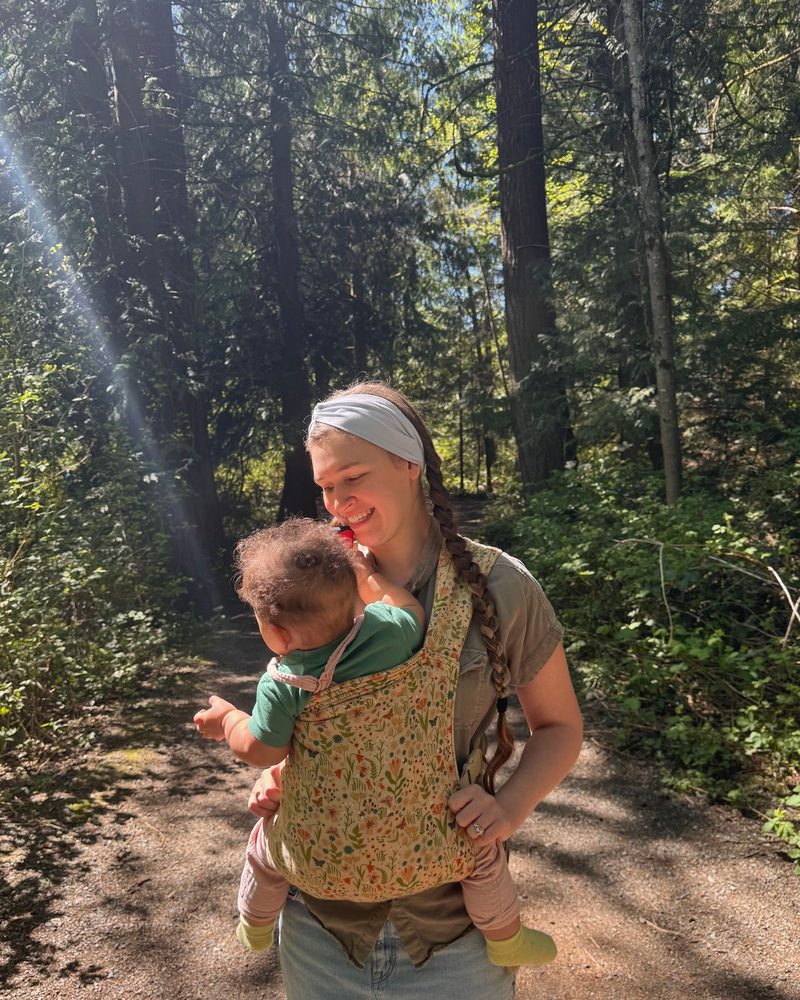
hope&plum Lark Baby Carrier (opens in new tab)
This is the one I use. It buckles on and carries on your front or back. The Baby Lark fits 10 to 45 pounds and the Kid Lark fits 25 to 65 pounds.
hope&plum Ring Sling (opens in new tab)
Quick to get on and off, which helps if your child goes up and down a lot between stations. Fits 7 to 35 pounds.
Water Bottles
What to look for: Stainless steel, with a lid your toddler can open.
Cold months tip:Fill a thermos-style bottle with warm water or warm milk. I recommend testing it at home a few times so they are used to it. Fill it warm, not hot, since insulated bottles keep drinks hot for hours.
Snack Containers
What to look for: Stainless steel or silicone, easy for toddlers to open on their own, and a lid that won’t spill in the backpack. Remember: all snacks must be nut-free.
Elk and Friends Stainless Steel Snack Cups (opens in new tab)
This is what we use. Stainless steel with a soft silicone lid toddlers can reach into, plus a travel lid that seals for the backpack.
Forest-Friendly Snack Ideas
The best forest school snacks are nut-free, easy to eat with muddy hands, and won’t melt or crumble everywhere. Some favorites: banana, blueberries cut in half, squeeze pouches, shredded cheese, crackers, puffs, dried fruit, veggie pouches, hard-boiled egg, rice cakes, and yogurt melts.
A ziplock bag with a mix of things works fine. Each family brings their own. We don’t share food between families.
Blankets
Picnic or outdoor blankets work great. Families like to set them up when they arrive as a “home base” so it’s ready for them when it’s snack and circle time. One with a waterproof backing keeps everyone dry on wet mornings.
Favorite Brands and Discounts
100% ZQ certified merino wool from a sister-owned shop in Jackson Hole, Wyoming. Our pick for base layers that hold up across seasons. Start with their toddler base layer sets. They’re what my daughter lives in year round. Little Roots families get 20% off with code LITTLEROOTS.
LITTLEROOTS tap to copy and shopOur go-to for rain suits, boots, and cold-weather gear. Little Roots families get 25% off orders over $29.99 plus free shipping over $100.
LITTLEROOTS tap to copy and shopOur pick for baby carriers. Designed and sewn in the USA by a women-owned brand. Little Roots families get 10% off through our referral link.
Shop hope&plum →A Finnish brand that makes PFAS-free kids’ gear. You’ll find specific product links throughout the page, or shop their full collection:
Shop Reima →A Note on Buying Secondhand
You don’t need to buy all of this new. Kids outgrow gear fast, so used outdoor clothes are often in great shape. Base layers, fleece, snow gear, and boots are easy to find at thrift and consignment shops, on Facebook Marketplace, or on resale sites like Poshmark and Mercari. The one thing I’d buy new is the rain layer, since waterproofing wears out over time.
Two of our favorite brands have their own used shops. At iksplor’s pre-loved store (opens in new tab), you can buy used iksplor gear or sell what your child has outgrown for cash or store credit. Merino holds up well through more than one kid, so there’s plenty to choose from. Patagonia has one too, called Worn Wear (opens in new tab).
Bringing Forest School Home
The hands-on work we do on Wednesdays doesn’t have to end at the trailhead. These are the pieces we use to bring that same kind of open-ended, child-led play into our home, and a few we recommend to families who want the same.
Learning Through PLAYtrays
A tuff tray is a shallow, sturdy tray built to contain messy, open-ended play. Think of it as a portable version of the forest floor: fill it with mud, water, sand, ice, paint, or loose parts from the backyard and let your child decide what happens next.
These are the same trays we set out at every Little Roots session. Each Wednesday they become our sensory stations: water play, mud kitchen, playdough, and small world trays. Kids who are used to seeing them at class already know what to do with one at home.
Little Roots families get 5% off with code LITTLEROOTS.
